Severe Weather Awareness Week
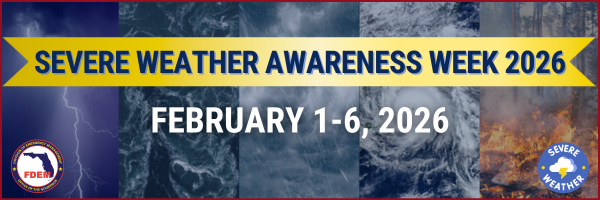
Florida Severe Weather Awareness Week is observed each year by the National Weather Service and Florida Division of Emergency Management to increase awareness of and preparedness for severe weather hazards.
Severe Weather Awareness Week
Each day focuses on a specfic weather event.
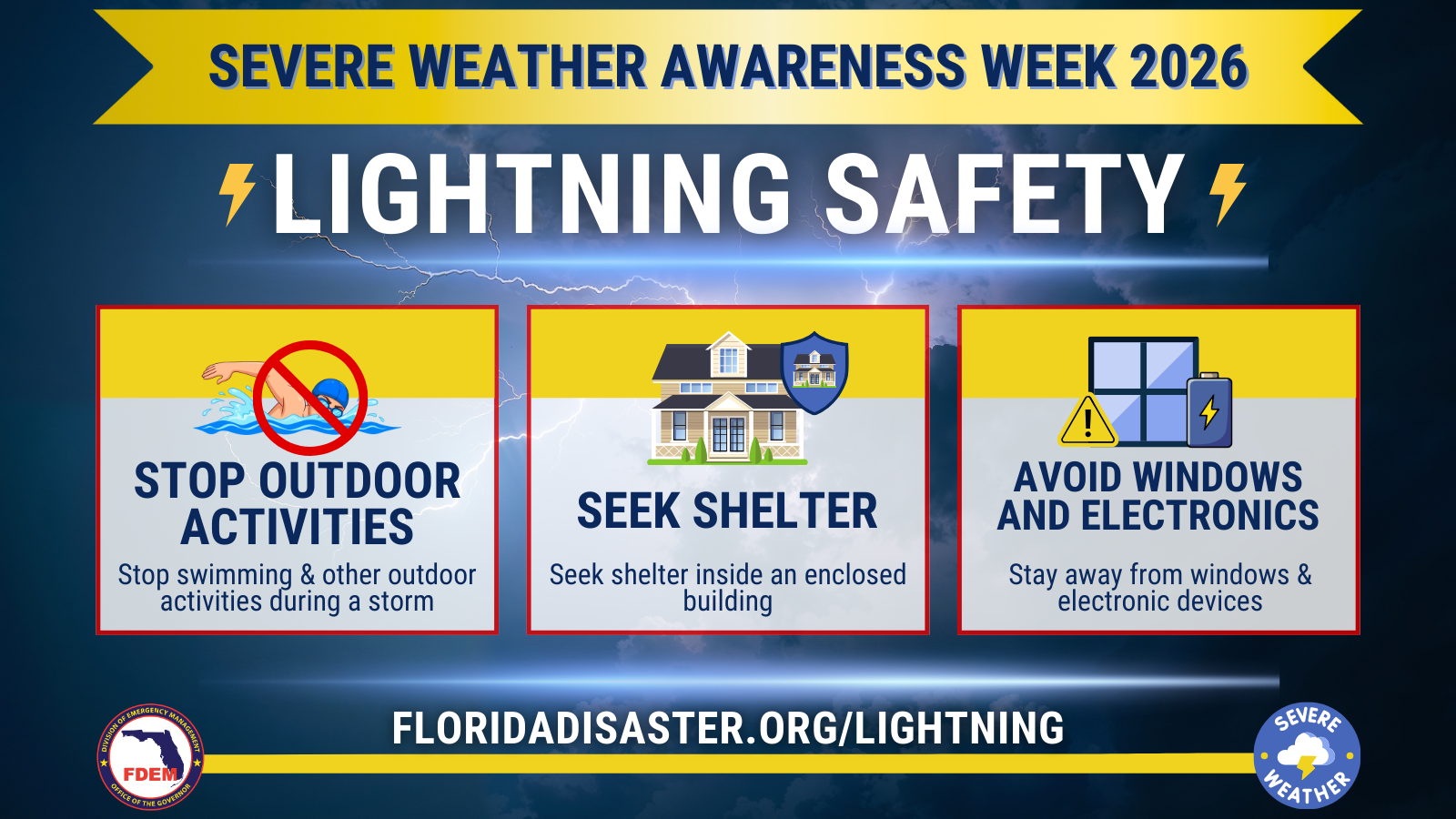
Severe Weather Awareness Week is a great opportunity to inform residents about the best way to prepare for and respond to various hazards in Florida. Below are social media graphics and a brochure available for download to assist with outreach efforts. We encourage everyone to use the hashtag #FLSWAW and tag the Division (@FLSERT on Instagram and X (formerly Twitter) (@FDEM on Facebook) in your posts, so we can share your posts to our social media channels.
2026 Severe Weather Awareness Week Toolkit
 |
 |
|
 |
 |
|
 |
 |
|
 |
 |
|
 |
 |
|
Statewide Tornado Drill - Wednesday, February 4th
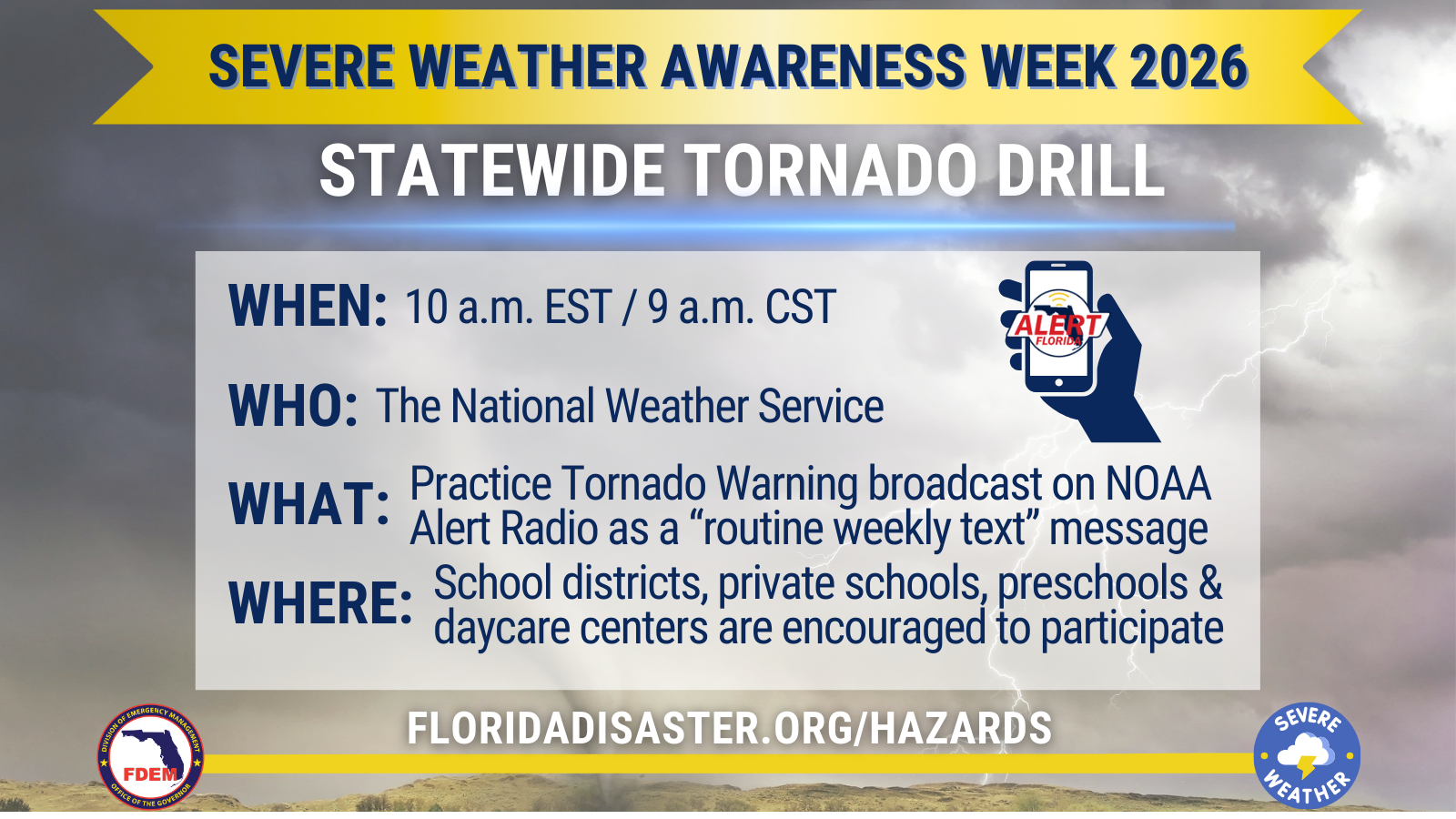
Participation in the statewide tornado drill is voluntary.
On the morning of the drill, all participants should consider themselves under a Tornado Watch. A Watch means you should monitor the weather and be prepared to go to a safe place in the event of a Warning. At approximately 10:00 a.m. EST, the National Weather Service will issue a practice Tornado Warning. The Warning will be broadcast on NOAA Alert Radio as a "routine weekly test" message.
Public and commercial broadcasters are encouraged to participate by broadcasting these messages immediately. For the Florida Panhandle counties within the Central time zone, all drill activities will be repeated one hour earlier (9:00 a.m. CST).
In real life, you must listen for the Watch and Warning messages to determine the threat to your area, and decide which protective actions to take. When in doubt, take immediate protective action! Plans may vary depending on the number of adults present, how vulnerable your location is, communications or other factors. All Floridians should use the tornado drill to develop and practice their severe weather plans. Being prepared saves lives!
Statewide Tornado Drill Timeline
School districts, private schools, preschools and daycare centers are urged to participate in the drill. The tornado warning will be broadcast on NOAA Weather Radio and will be encoded as a weekly test for this drill. If actual severe weather is forecast for that day, the drill will be postponed.
- In the weeks before the drill
• Prepare
• Inform staff
• Review and refine a tornado plan (go to www.spc.noaa.gov/faq/tornado/safety.html for more information) - February 4: The Day of the Drill
After 8:00 a.m. EST
Consider a Tornado Watch to be in effect
• Announce watch to staff and/or students
• Designate authority (coordinator)
• Evacuate tornado vulnerable areas - 10:00 a.m. EST
Tornado Warning
• Receive test message
• Upon determination of immediate threat, give “take shelter” or “duck and cover” command (depending on space available at location) - 10:30 a.m. EST
Termination of Watch and Warning
• Give instructions to return to normal activities (You will not receive notification. Terminate the drill as you see fit.) - After the Drill
Wrap-up
• Following the drill, assess and revise plan as needed.
Severe Weather Season: Meteorology Minute
Flooding: Meteorology Minute
Lightning: Meteorology Minute
Rip Currents: Meteorology Minute
Tornadoes: Meteorology Minute
Wildfires: Meteorology Minute
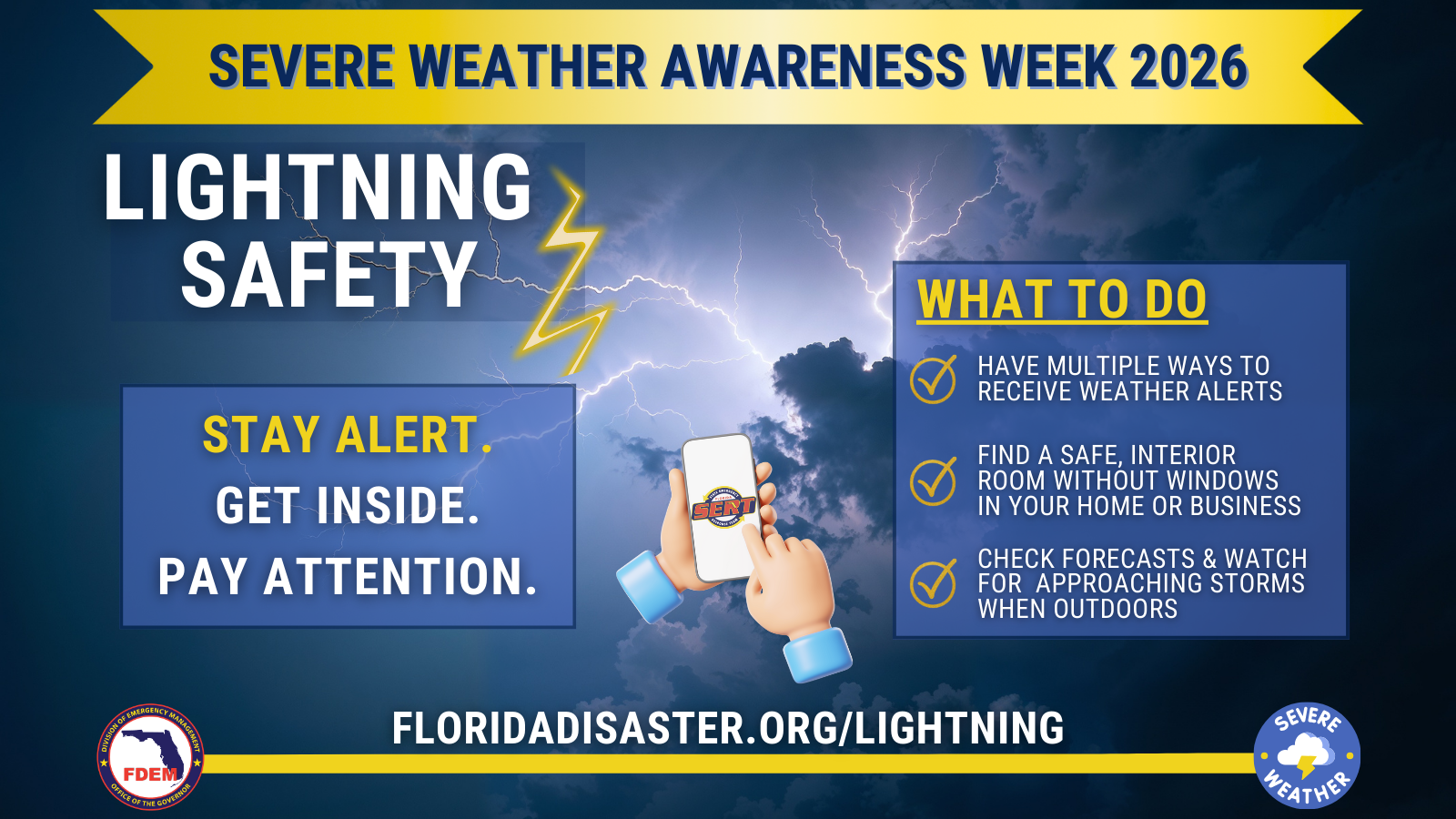
Monday-Lightning
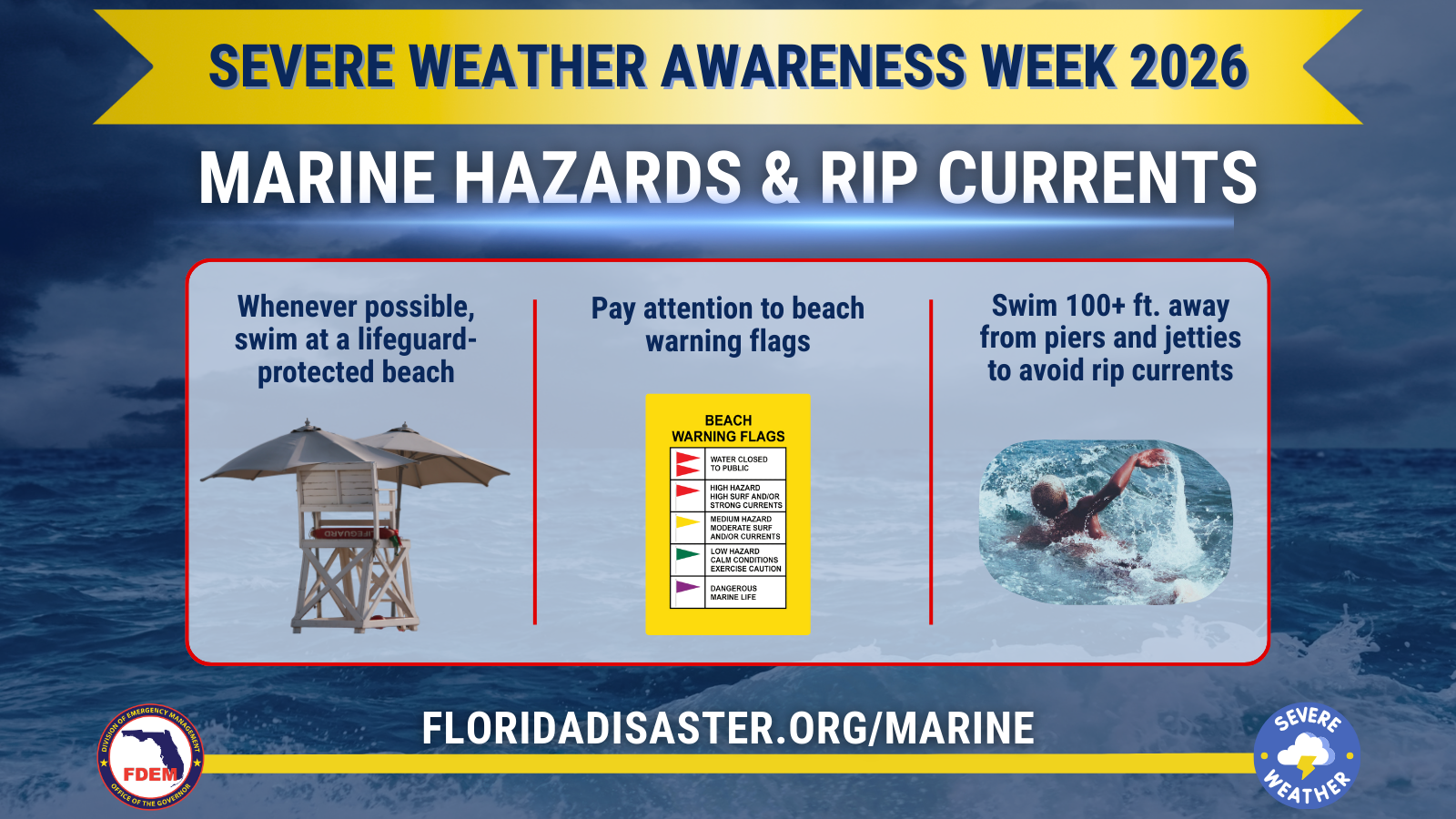
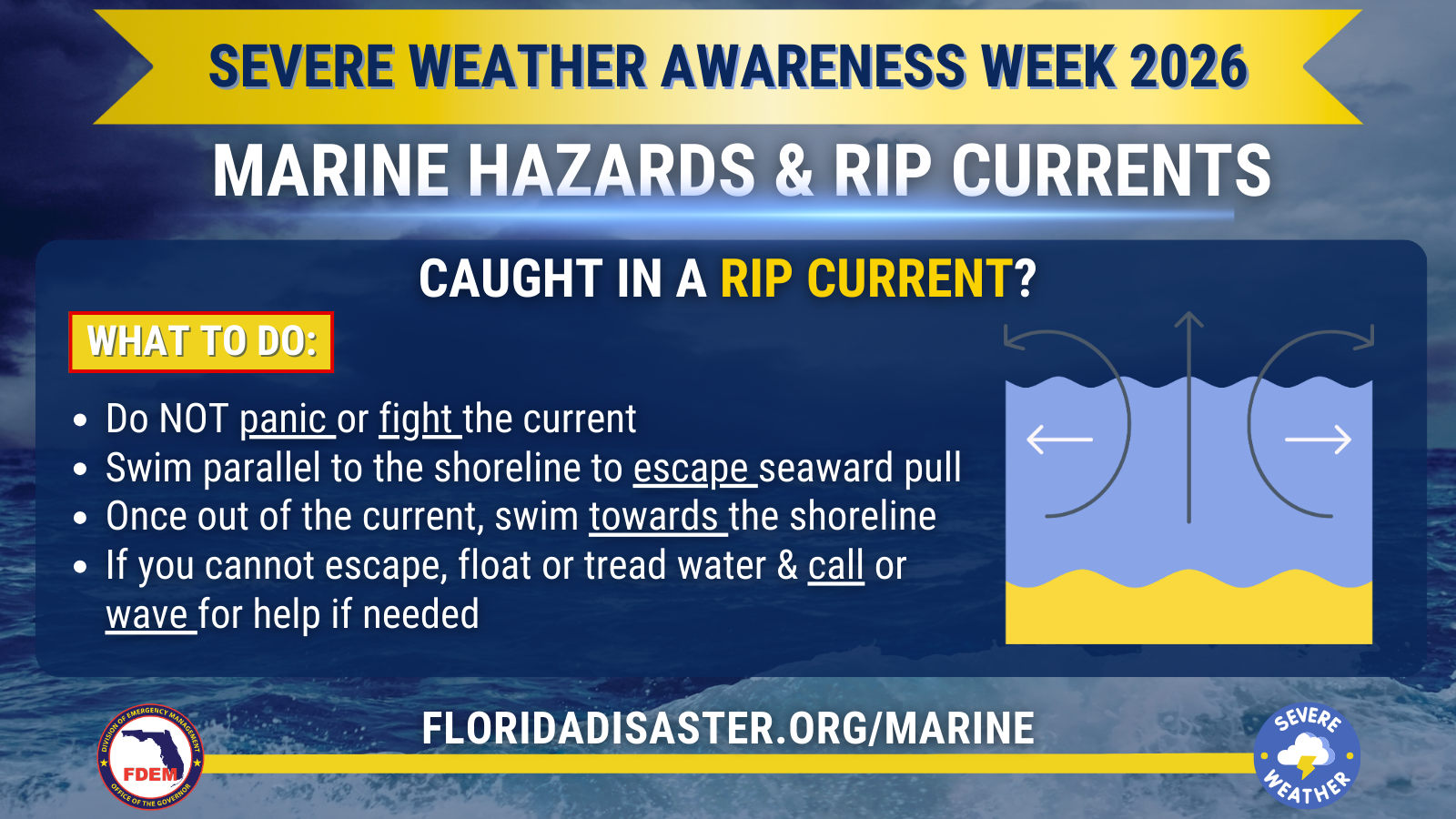
Tuesday-Marine Hazards and Rip Currents
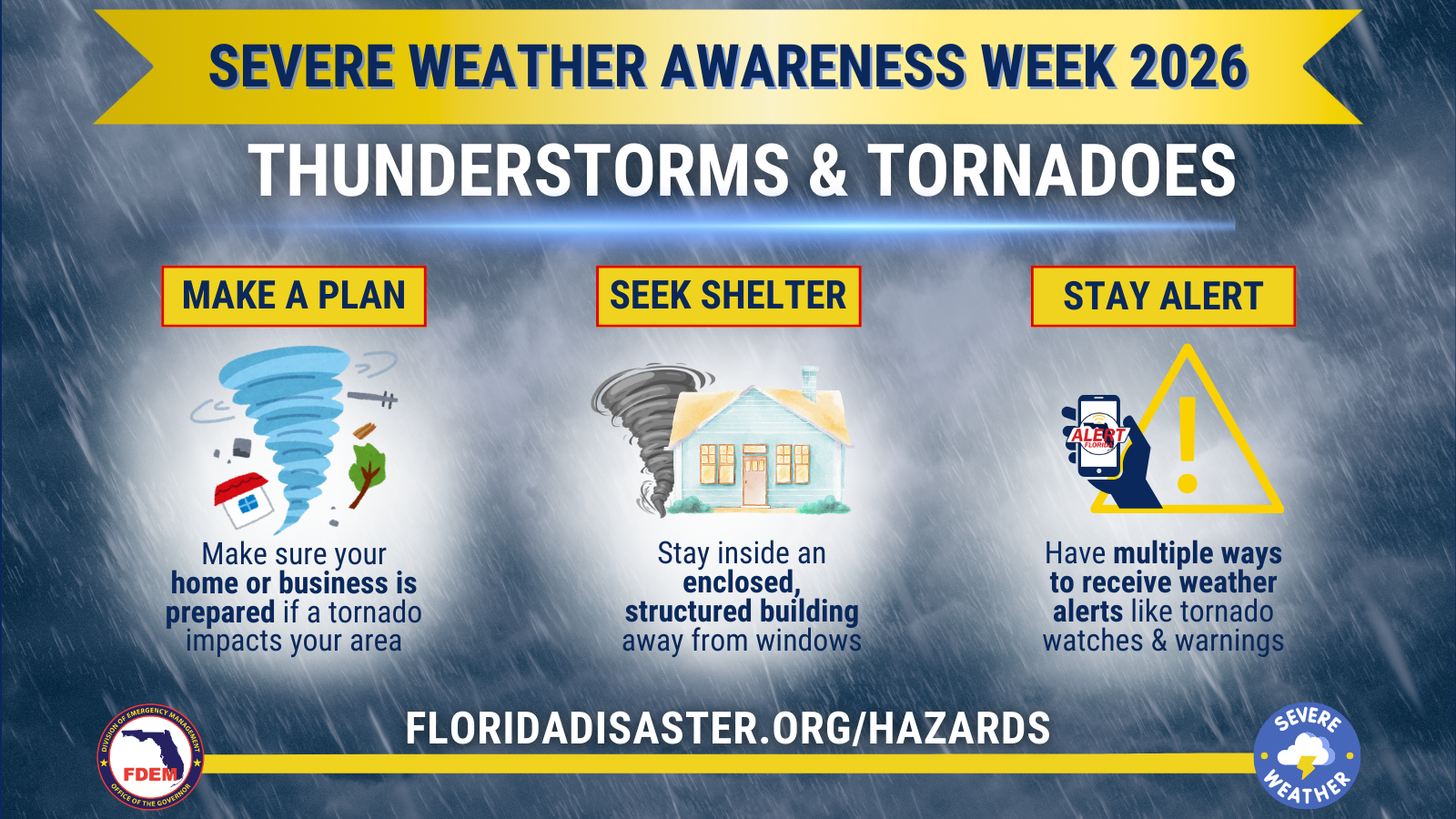
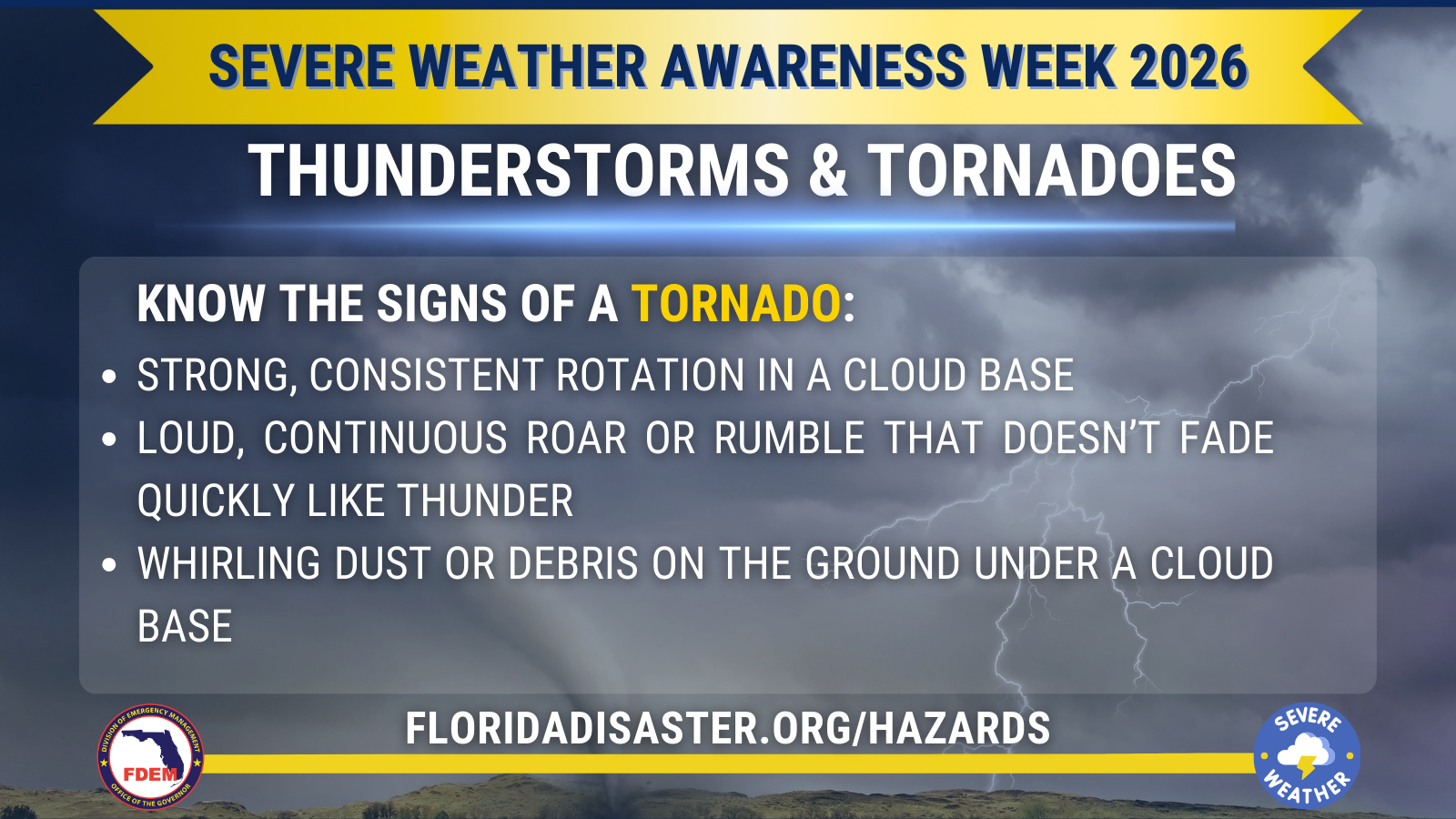
Wednesday-Thunderstorms and Tornados
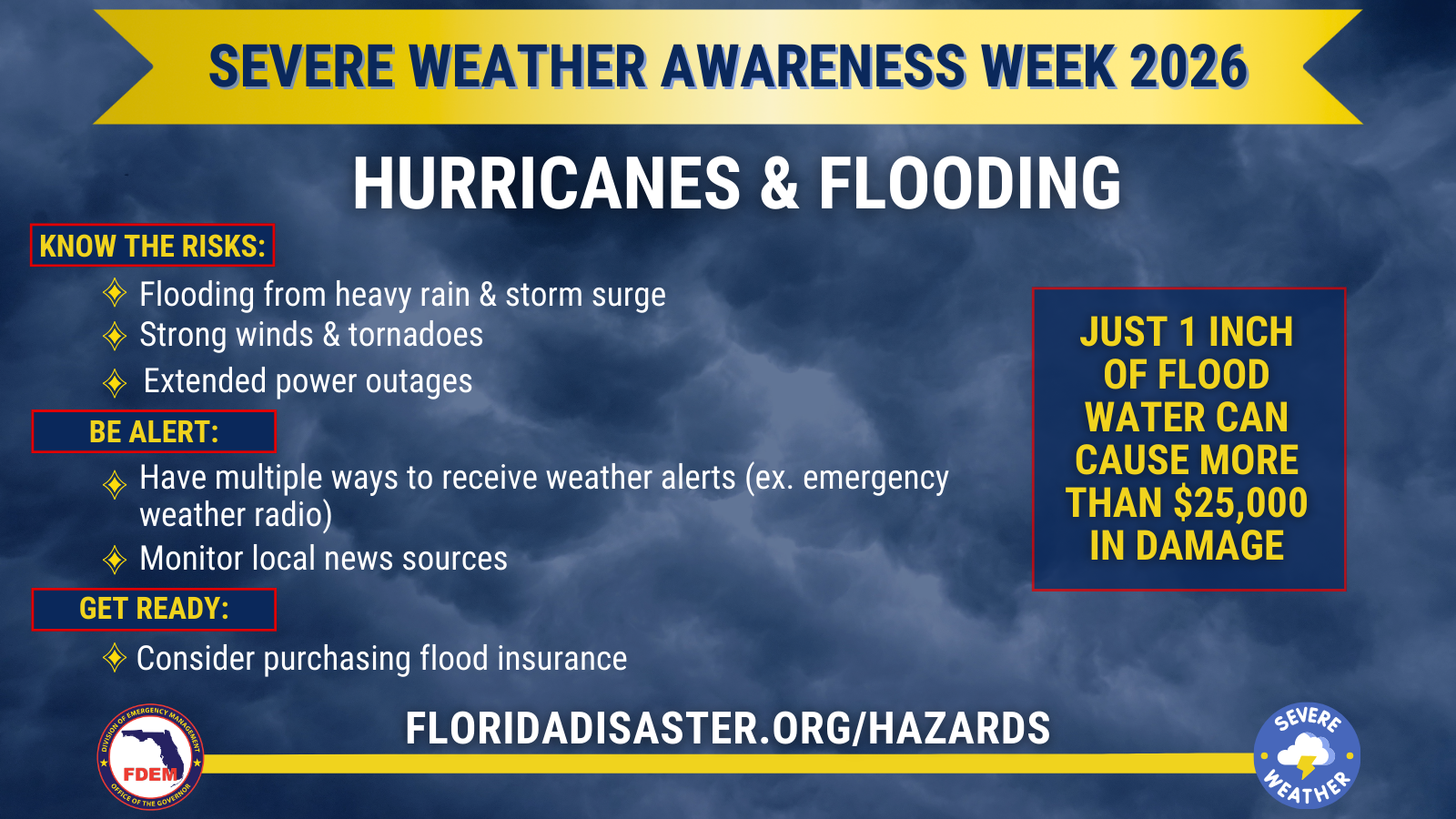
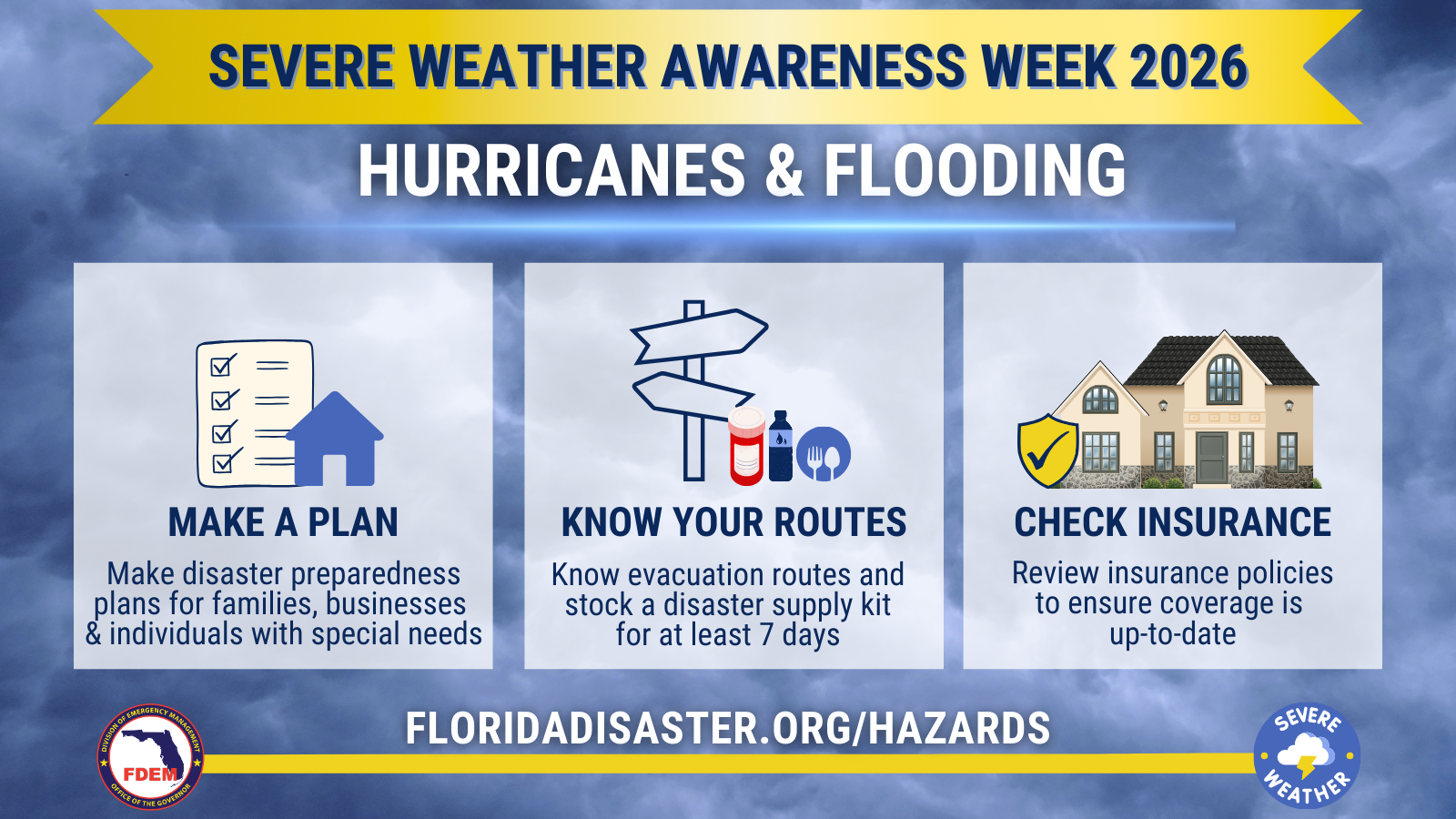
Thursday-Hurricanes and Flooding
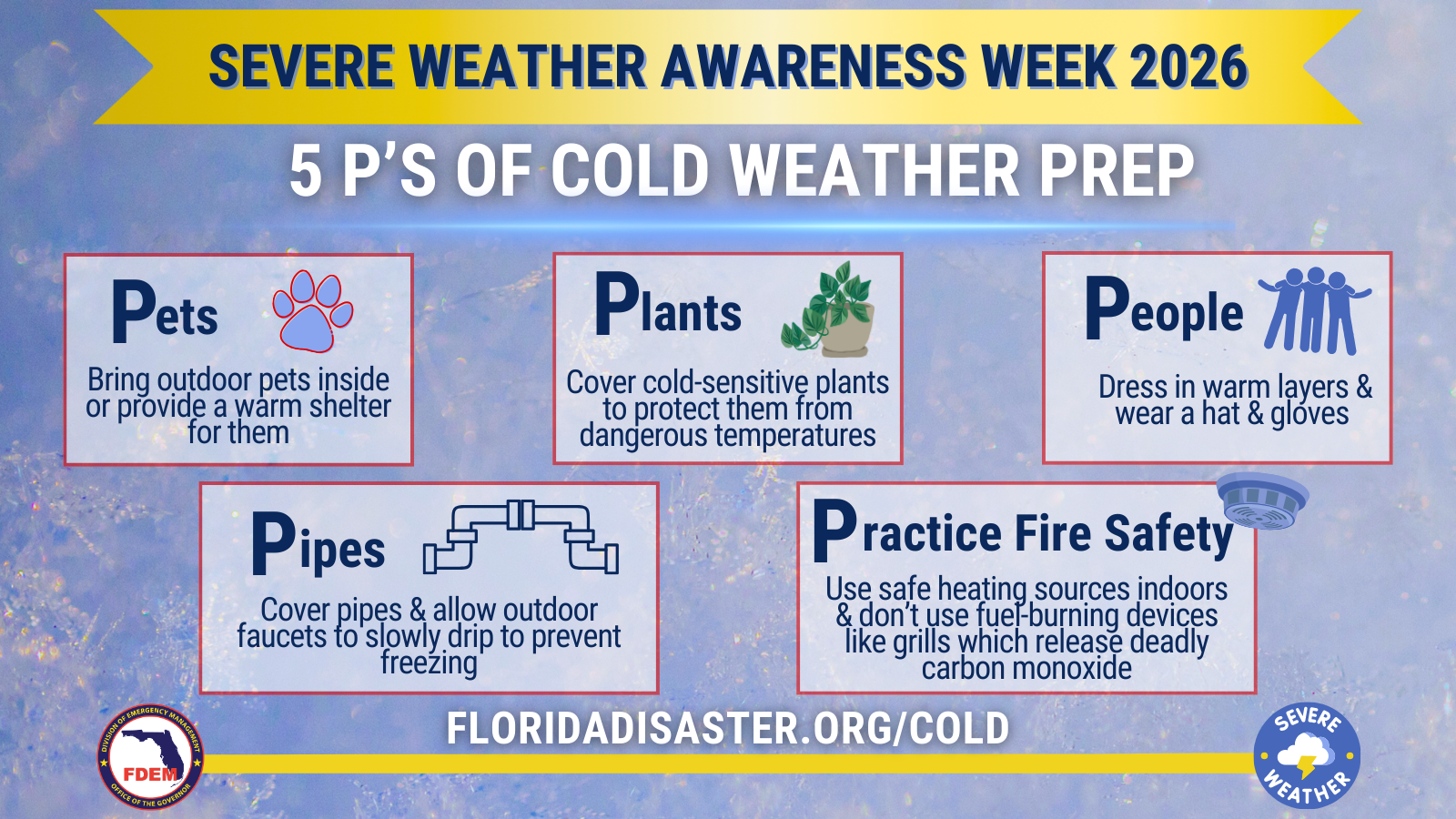
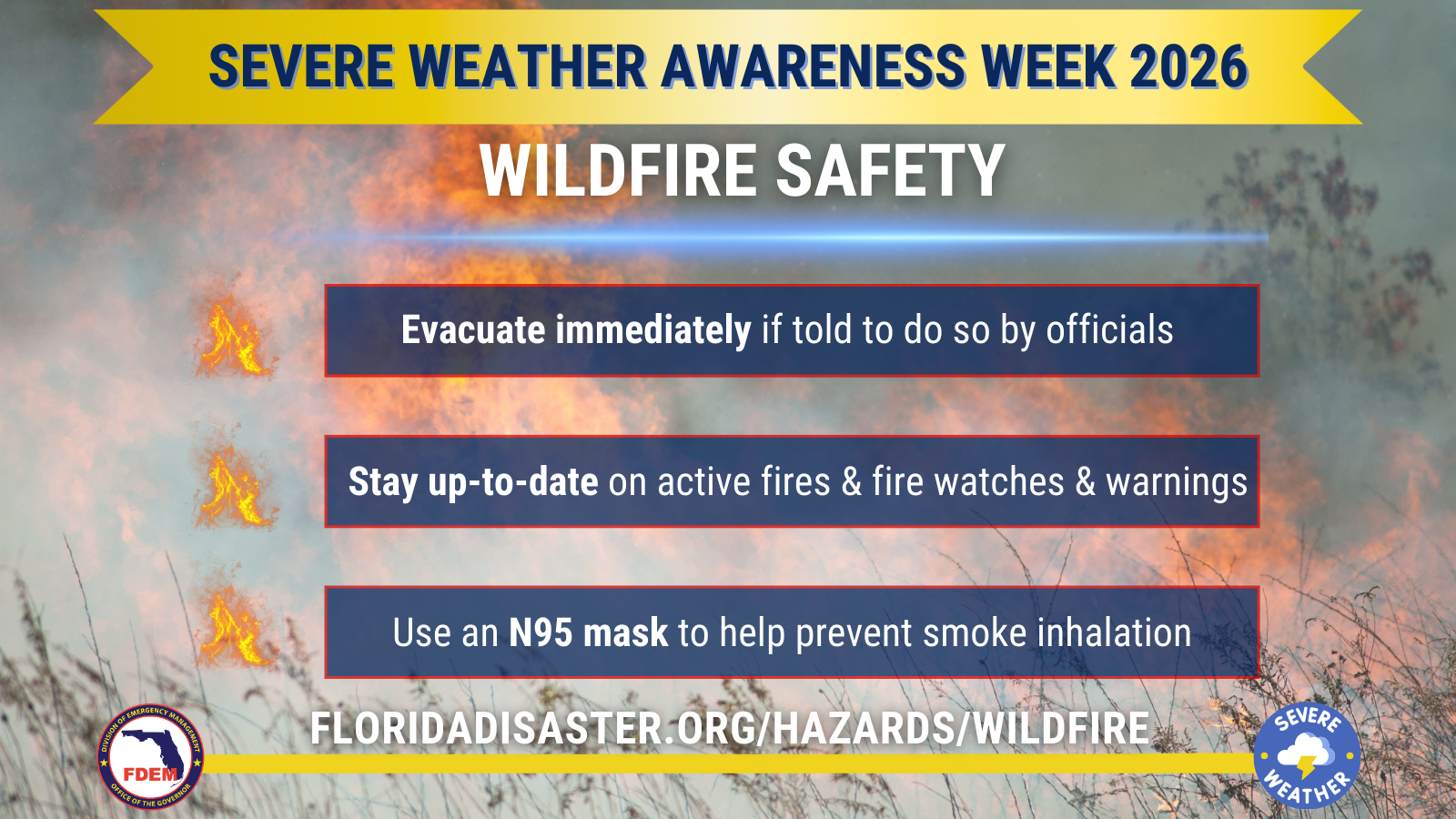
Friday-Temperature Extremes and Wildfires